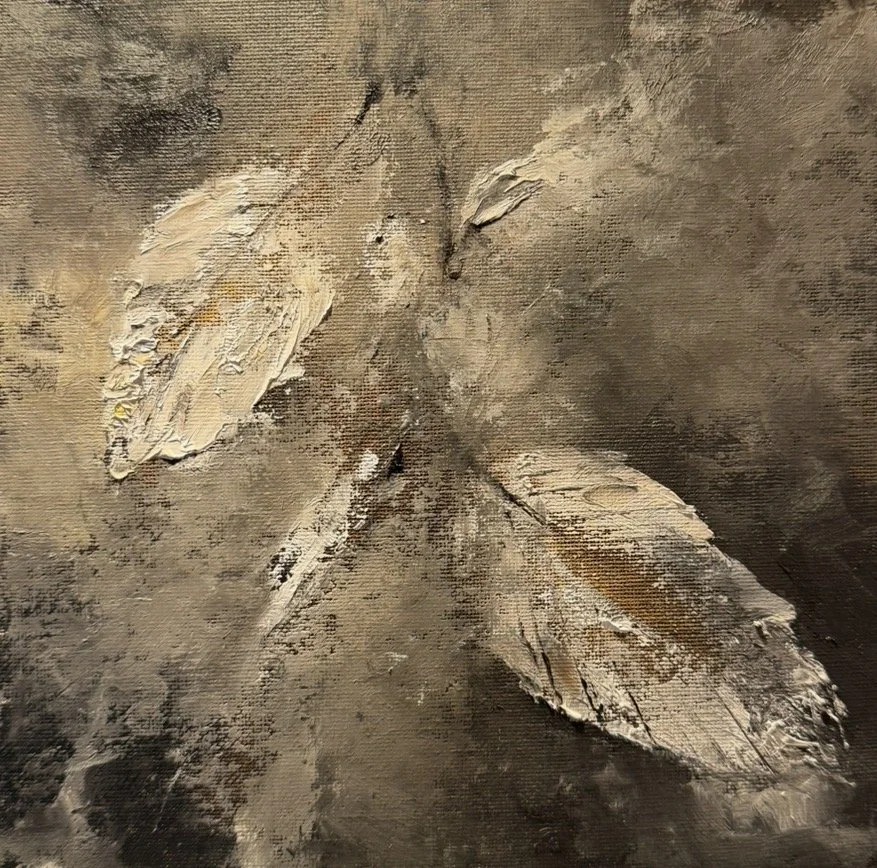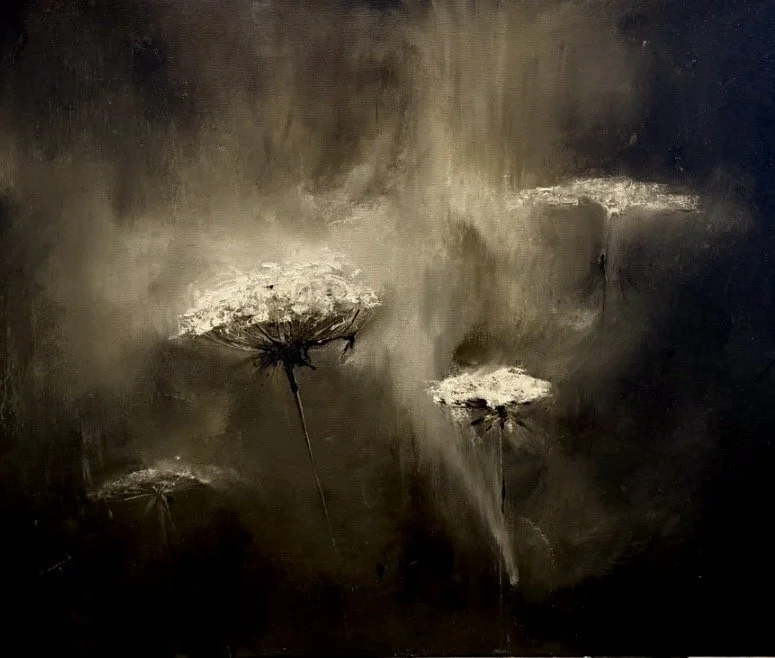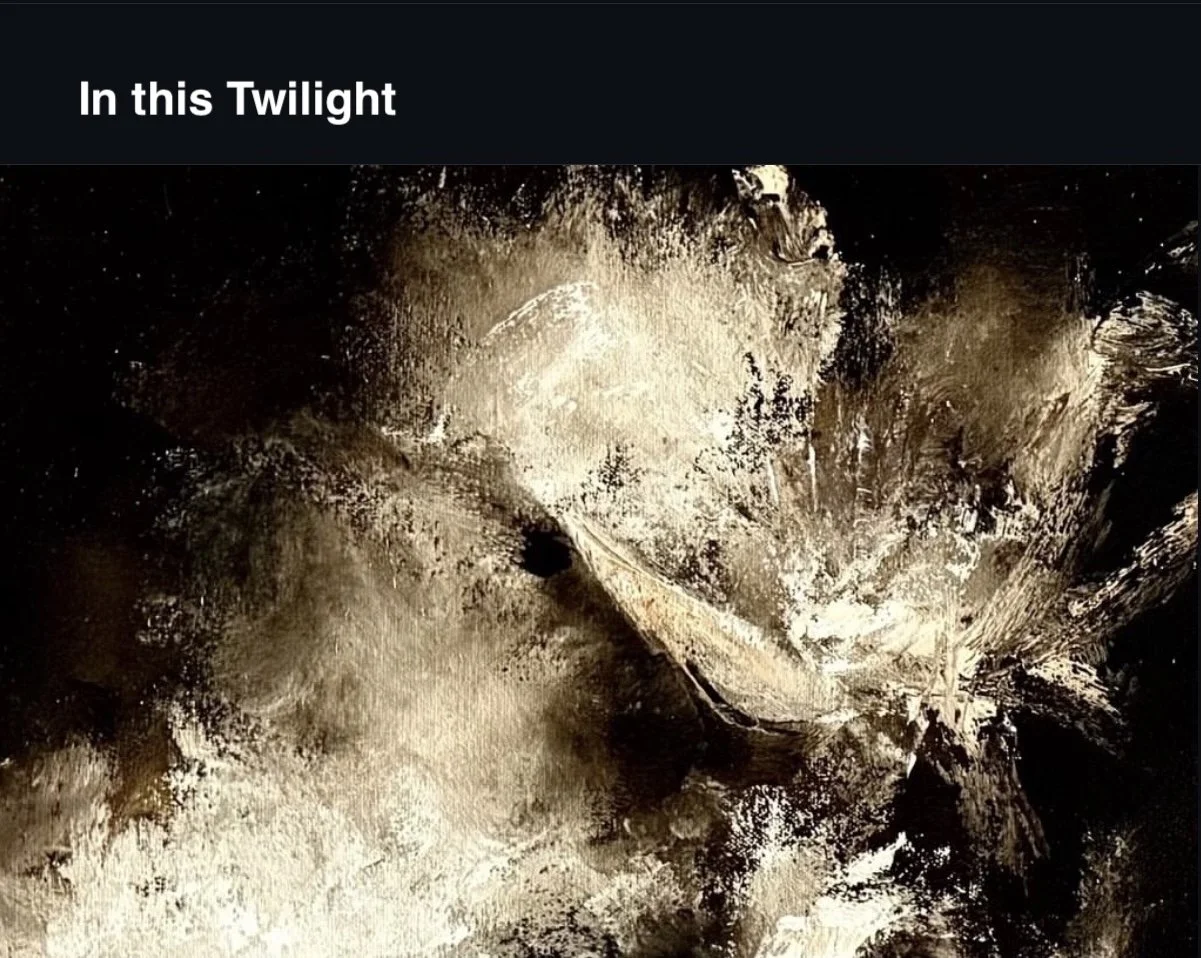
“In this Twilight” is an interdisciplinary project bridging art, materiality, ecology, spirituality and literature that will culminate in two exhibitions in Cambridge, Mass. in conjunction with my 2027 residency at Harvard University’s Divinity School/Center for the Study of World Religions.
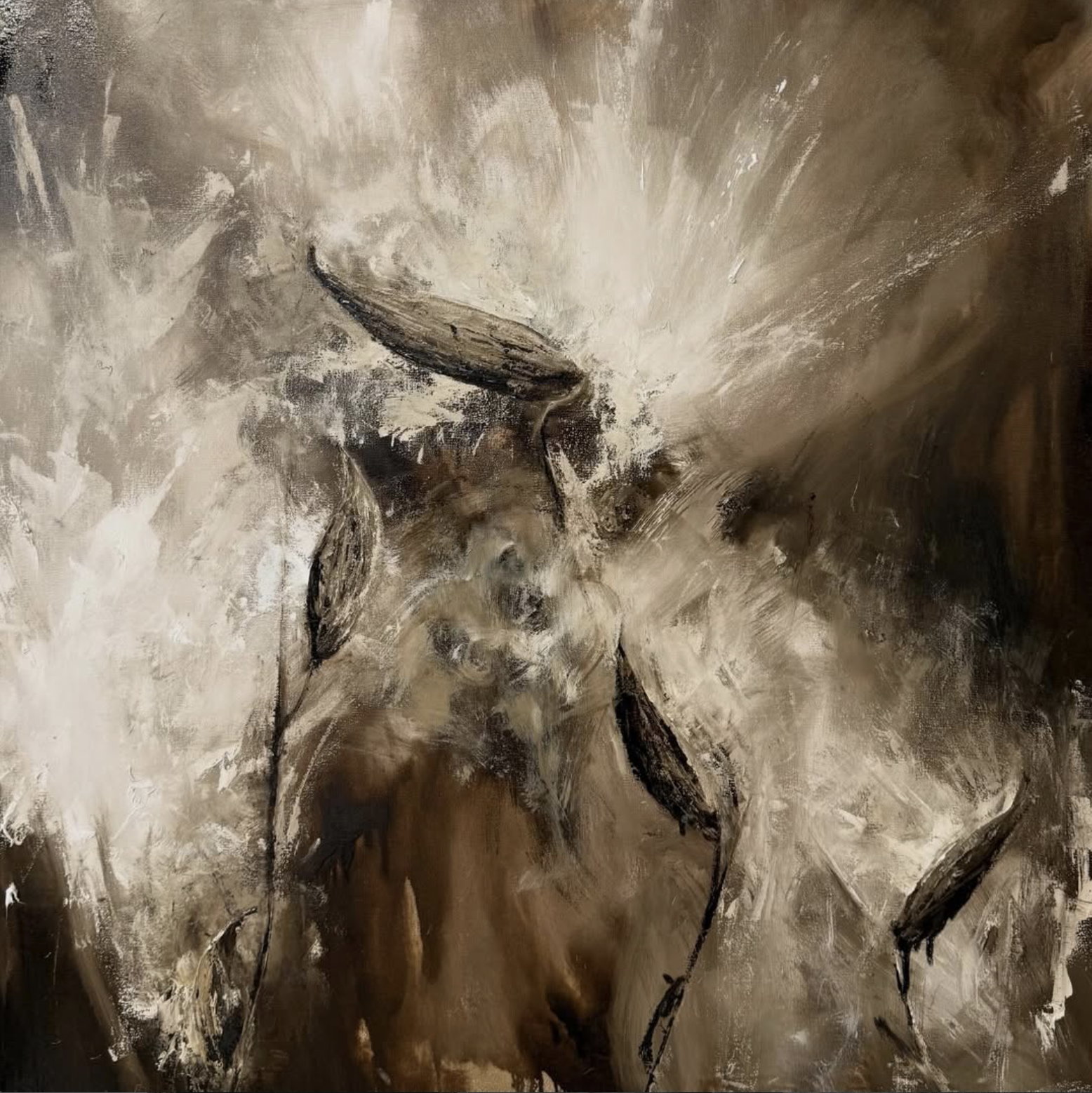
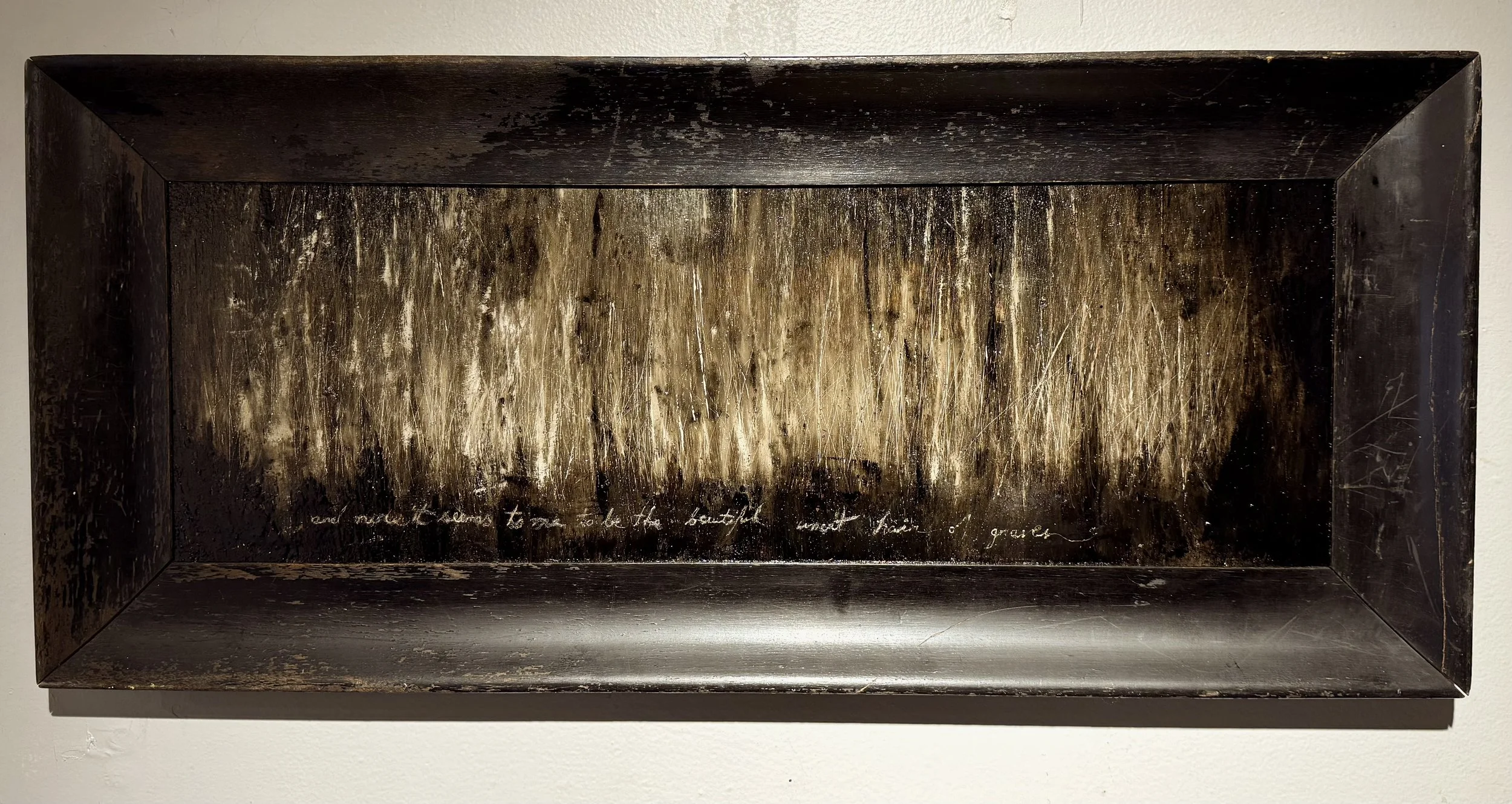
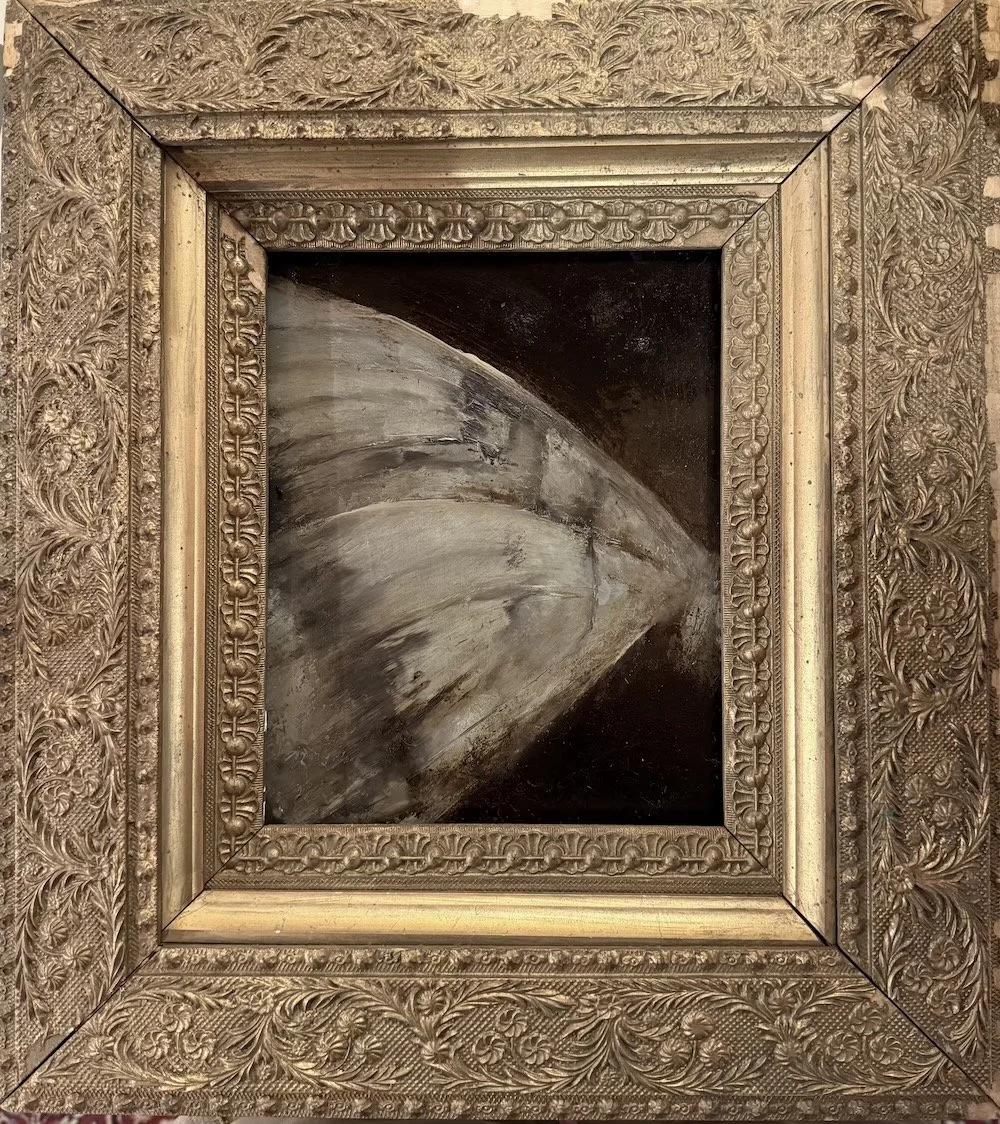
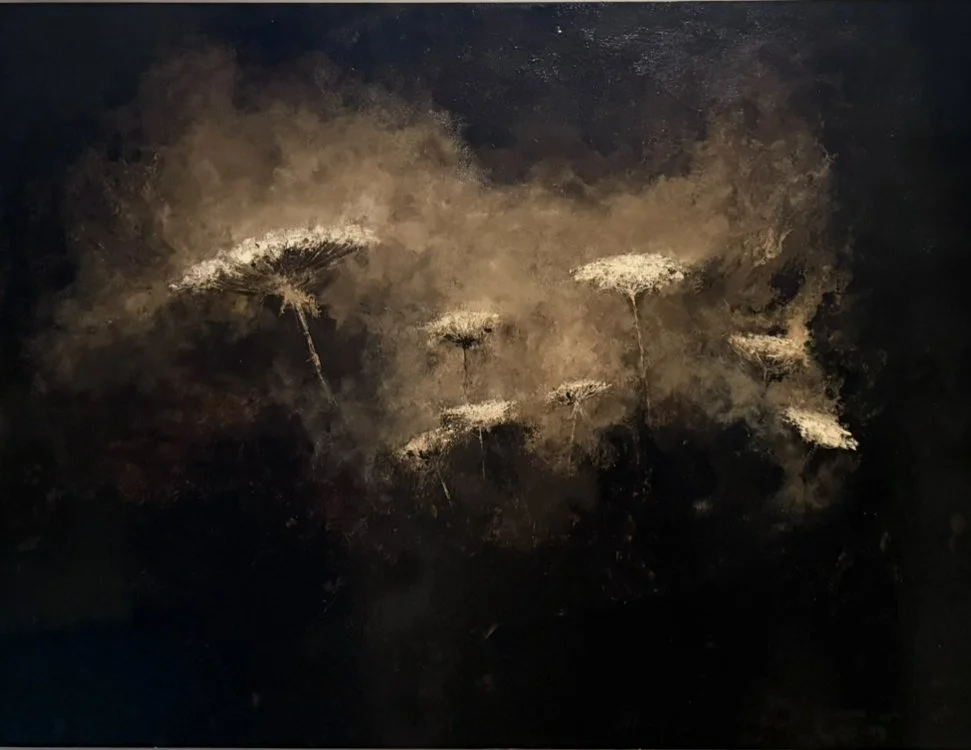
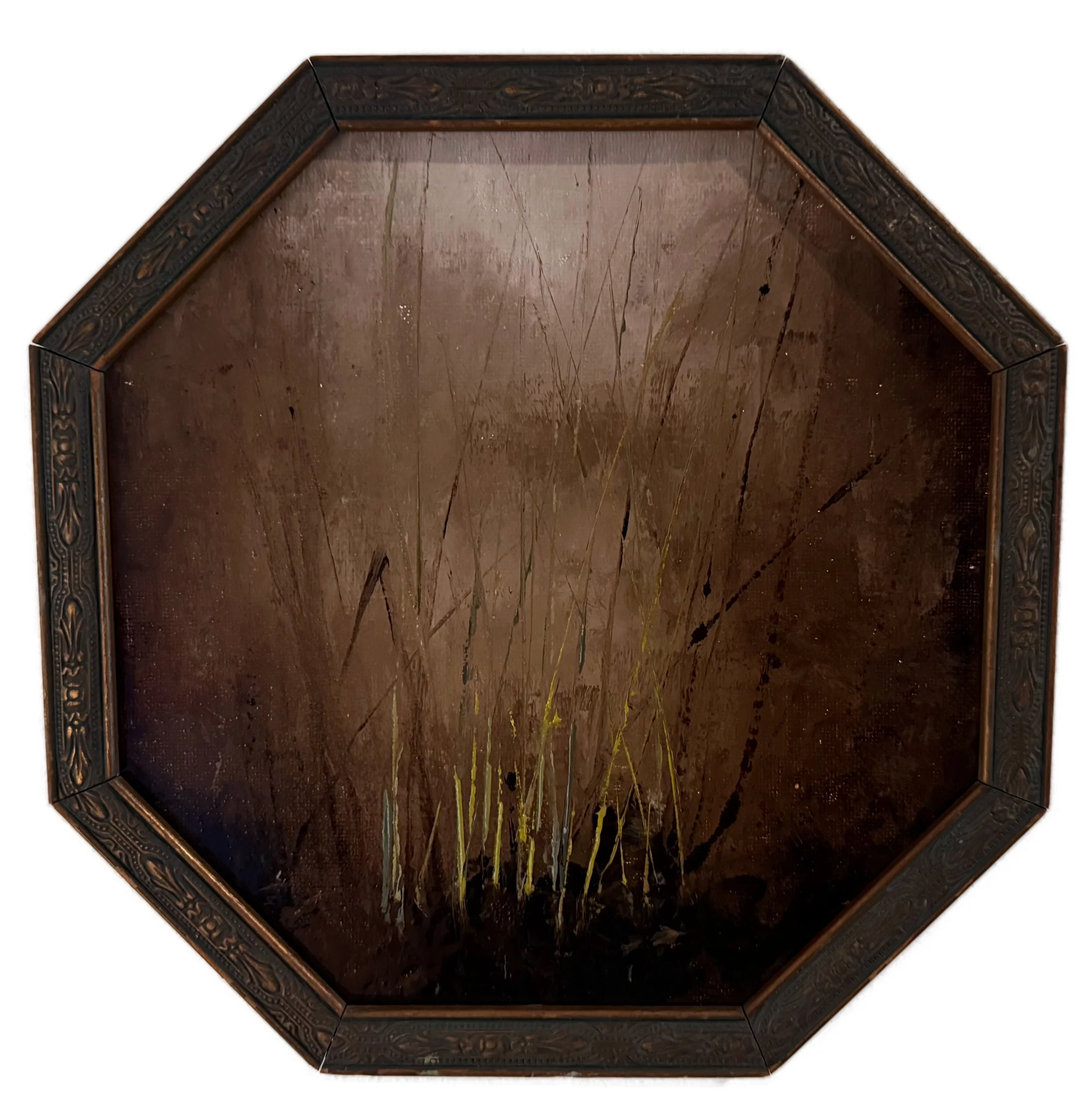
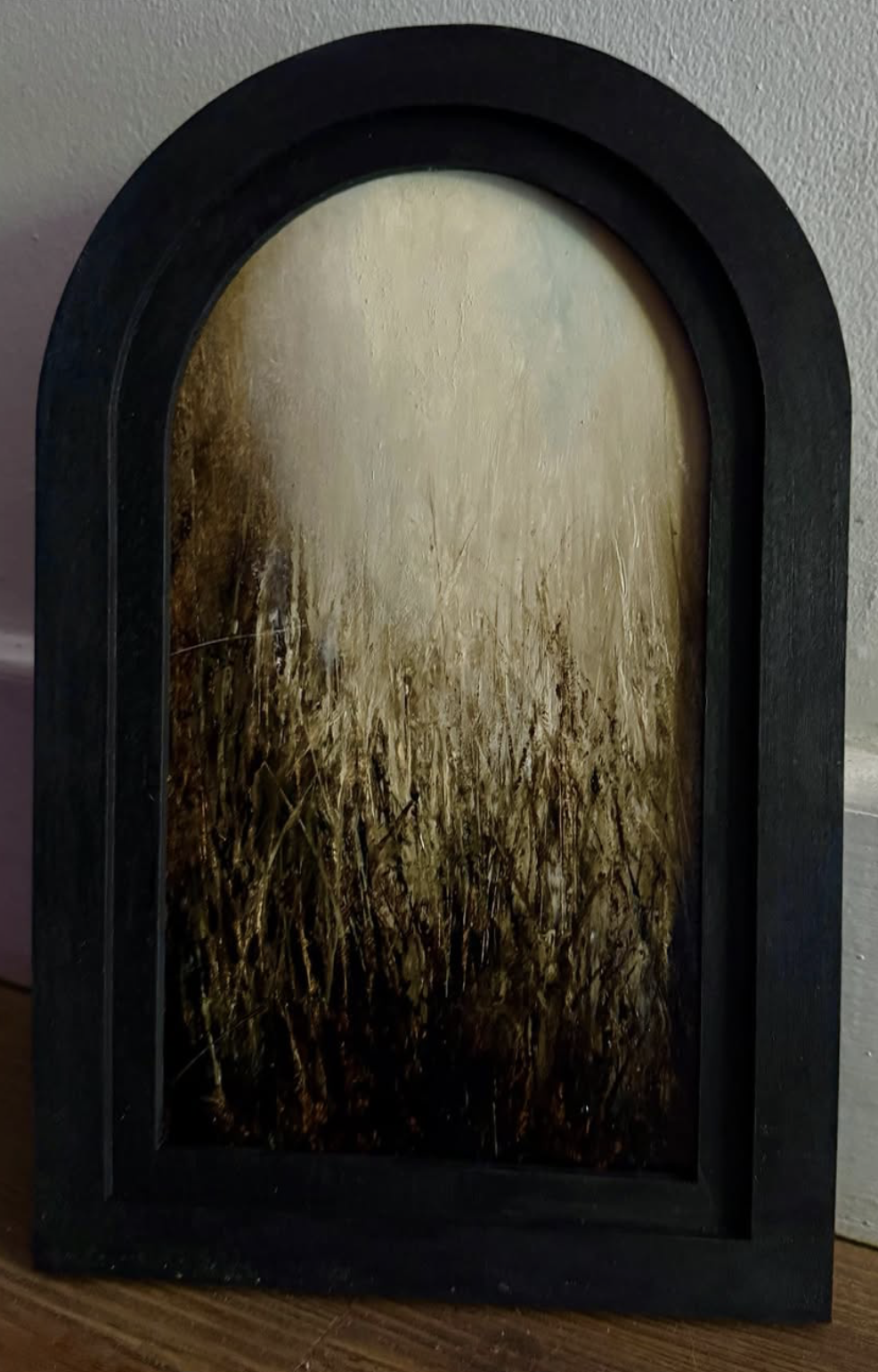
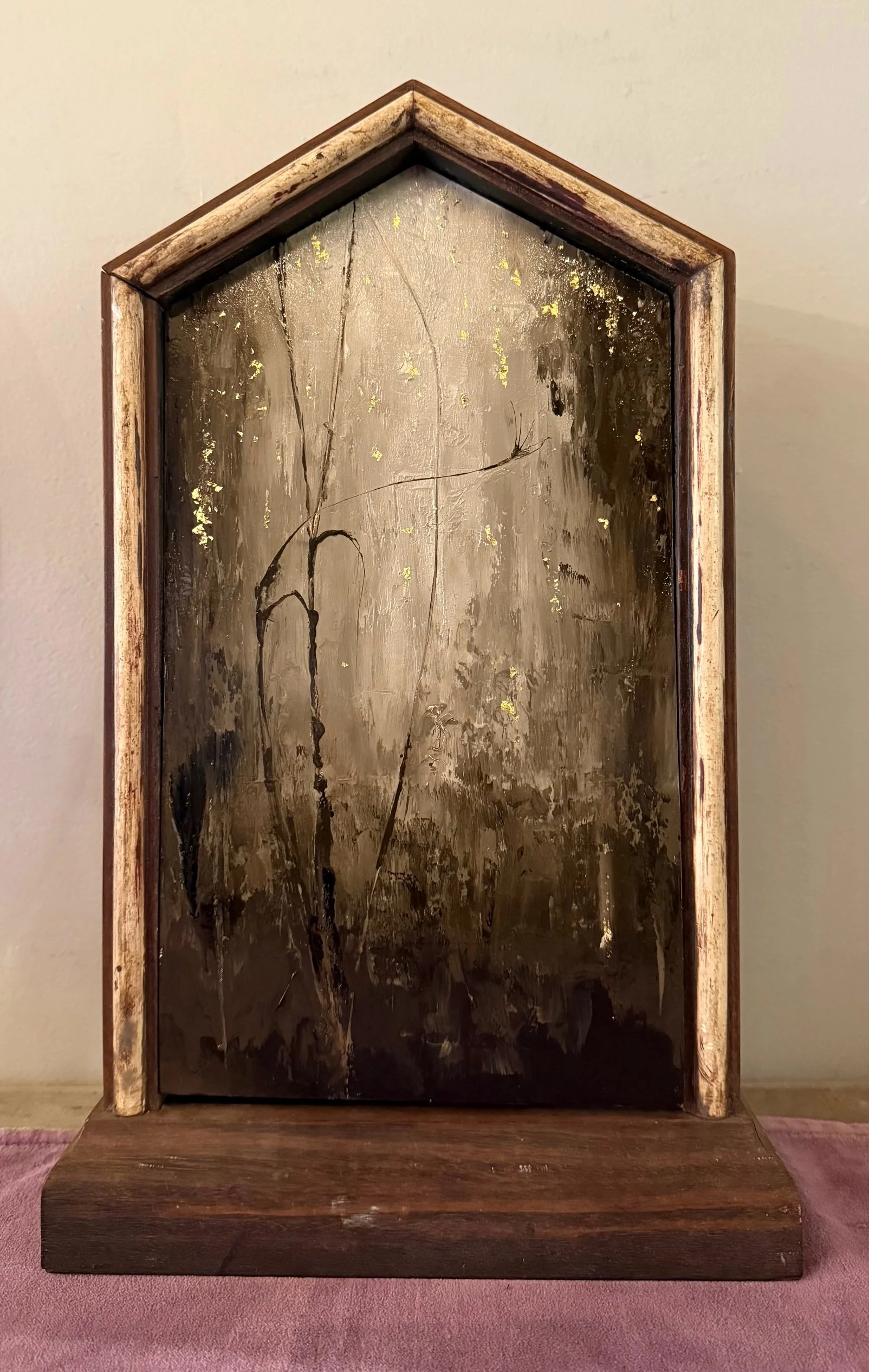
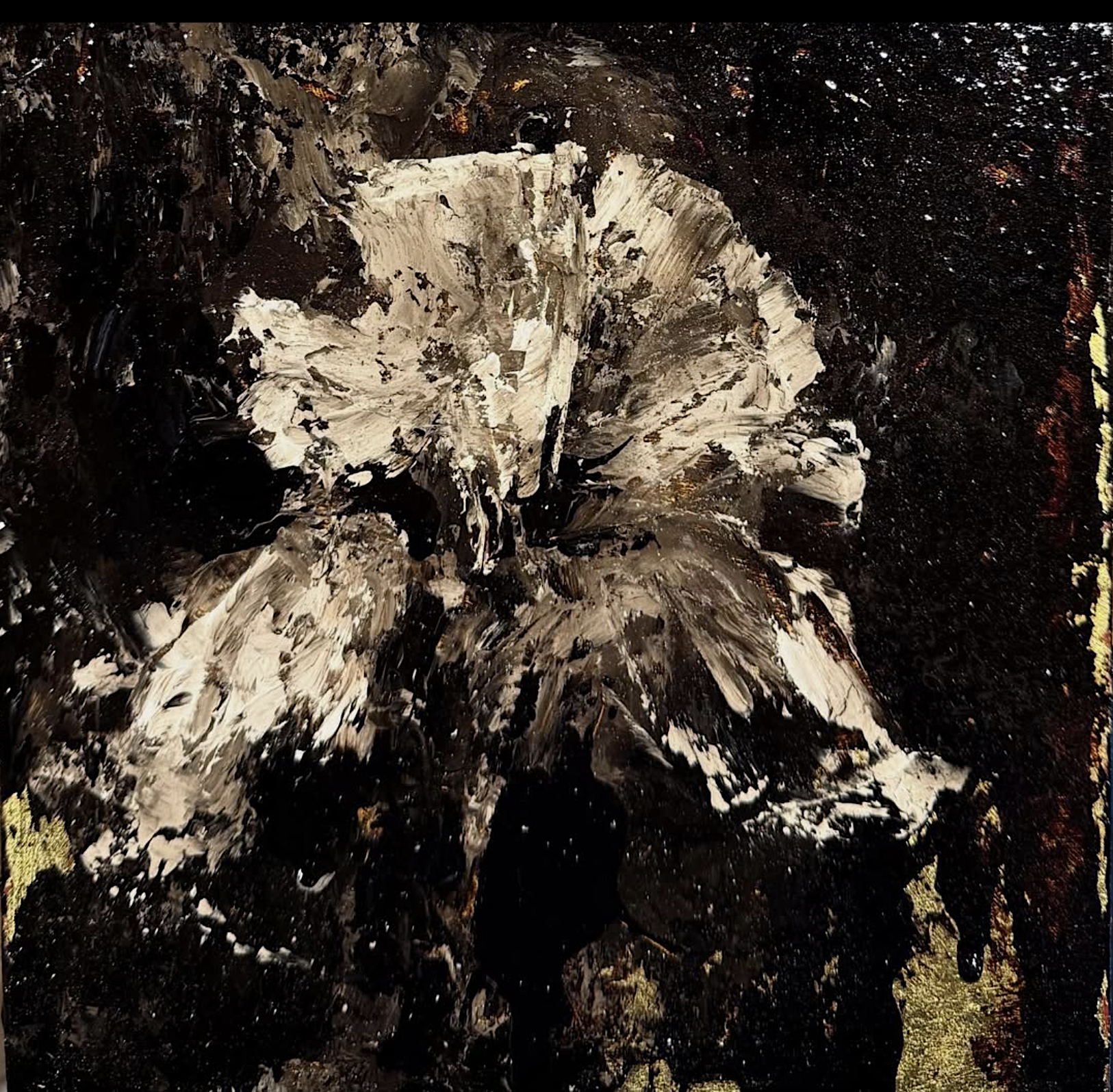
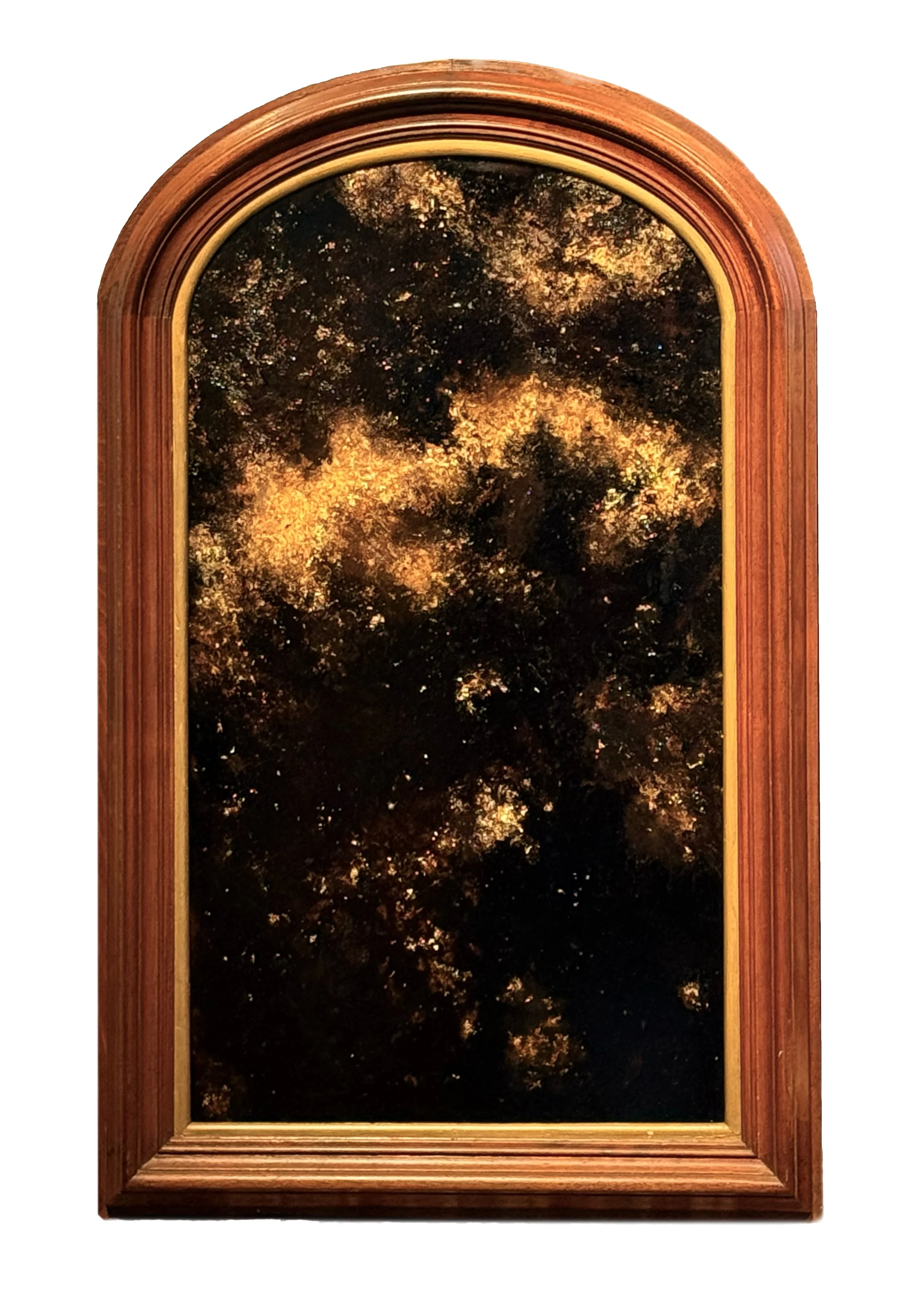
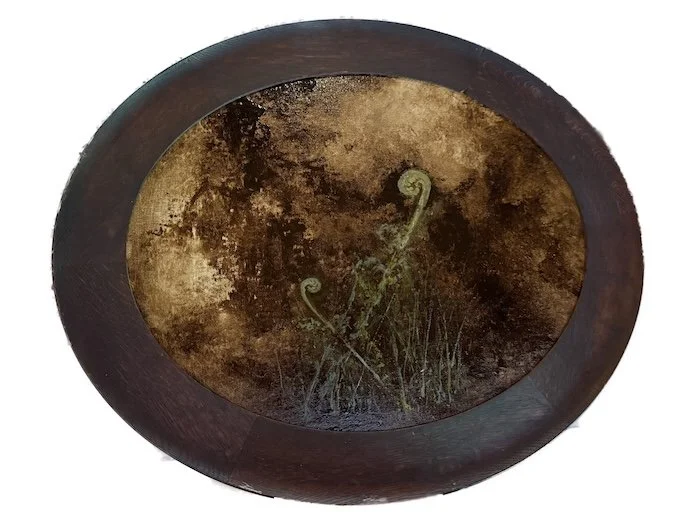
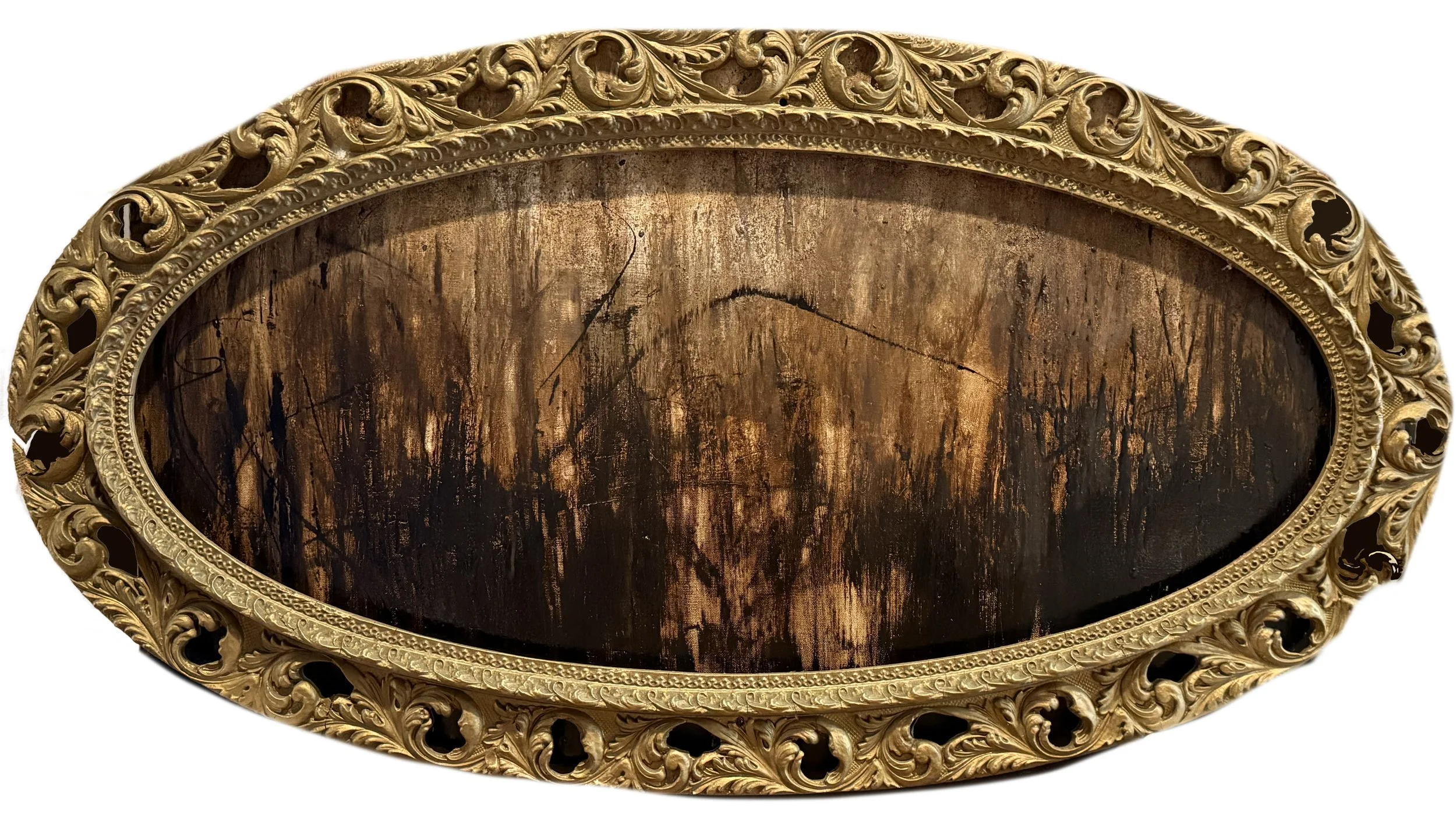
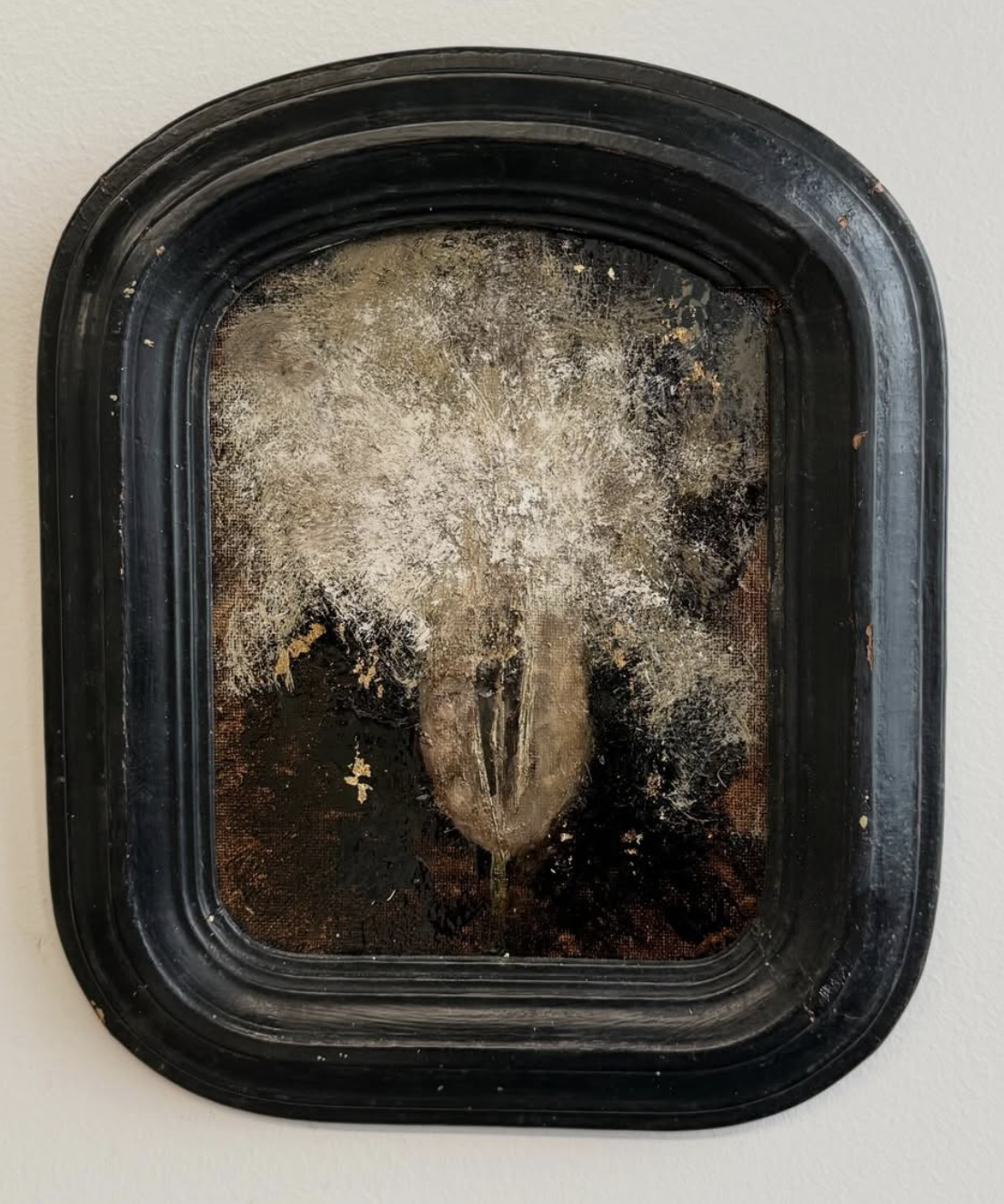
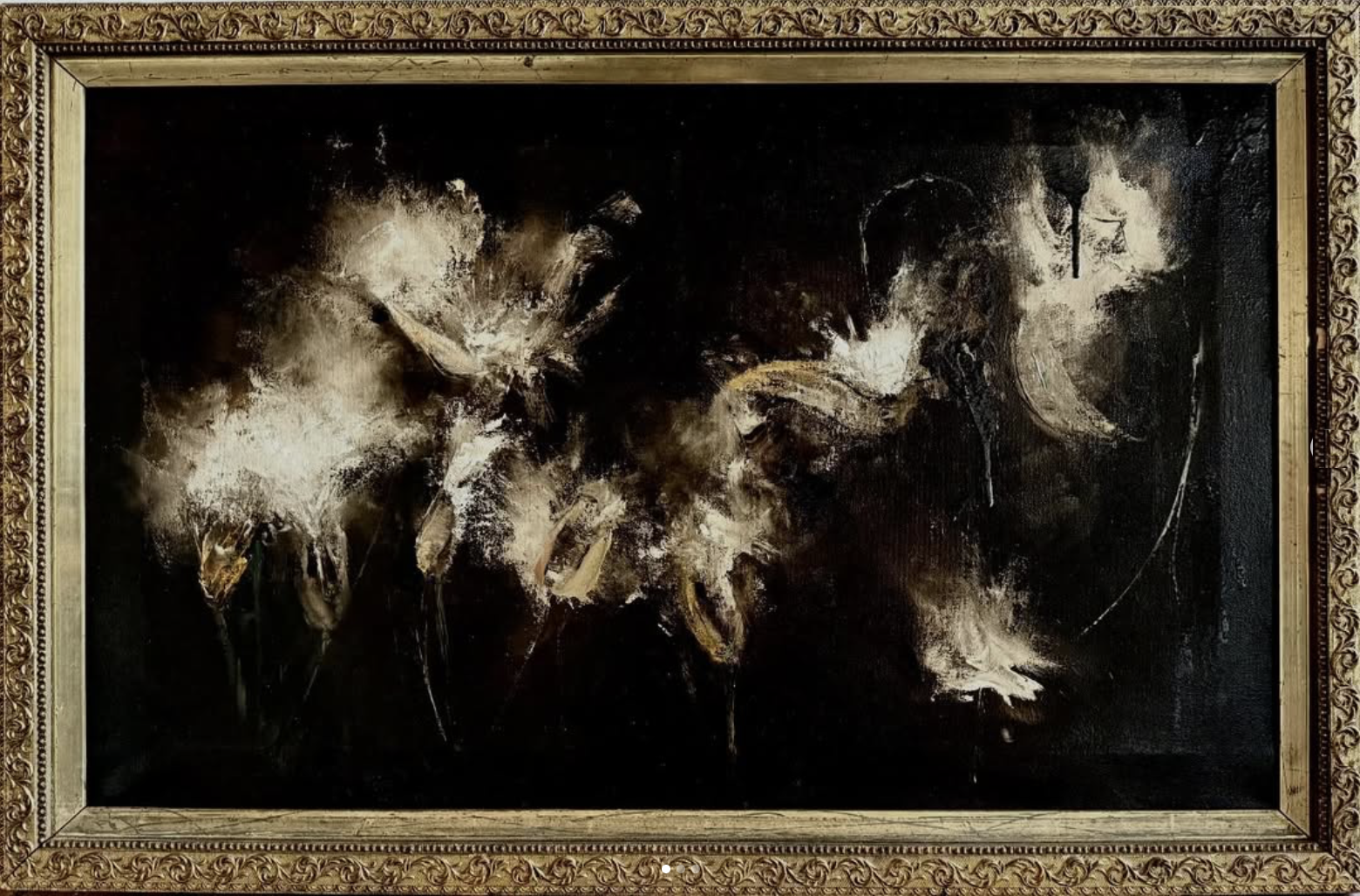
Titled with phrases from the works of Henry David Thoreau, Ralph Waldo Emerson, Margaret Fuller, Walt Whitman, and Emily Dickinson, "In this Twilight" (a phrase from “Leaves of Grass”) offers an elegiac and perhaps prophetic reminder of our lost reverence for nature amid acknowledgement of an imperiled future. Visually, the paintings, combining industrial coal-tar, ash, oil paint, and gold leaf, suspend natural imagery in a liminal space suggestive of an “imaginal” world, one in which natural and supernatural intertwine. In this Twilight avoids offering hope as reassurance nor despair as performance. The intention is to hold grief without aestheticizing catastrophe. The work sits between Anthropocene art, material experimentation, activism, and dark ecology/spirituality. You might say the work courts “ecotrauma,” the pain of facing our lost connection to the damaged biosphere – and yet, there’s arguably more of the lyrical than the elegiac present here.
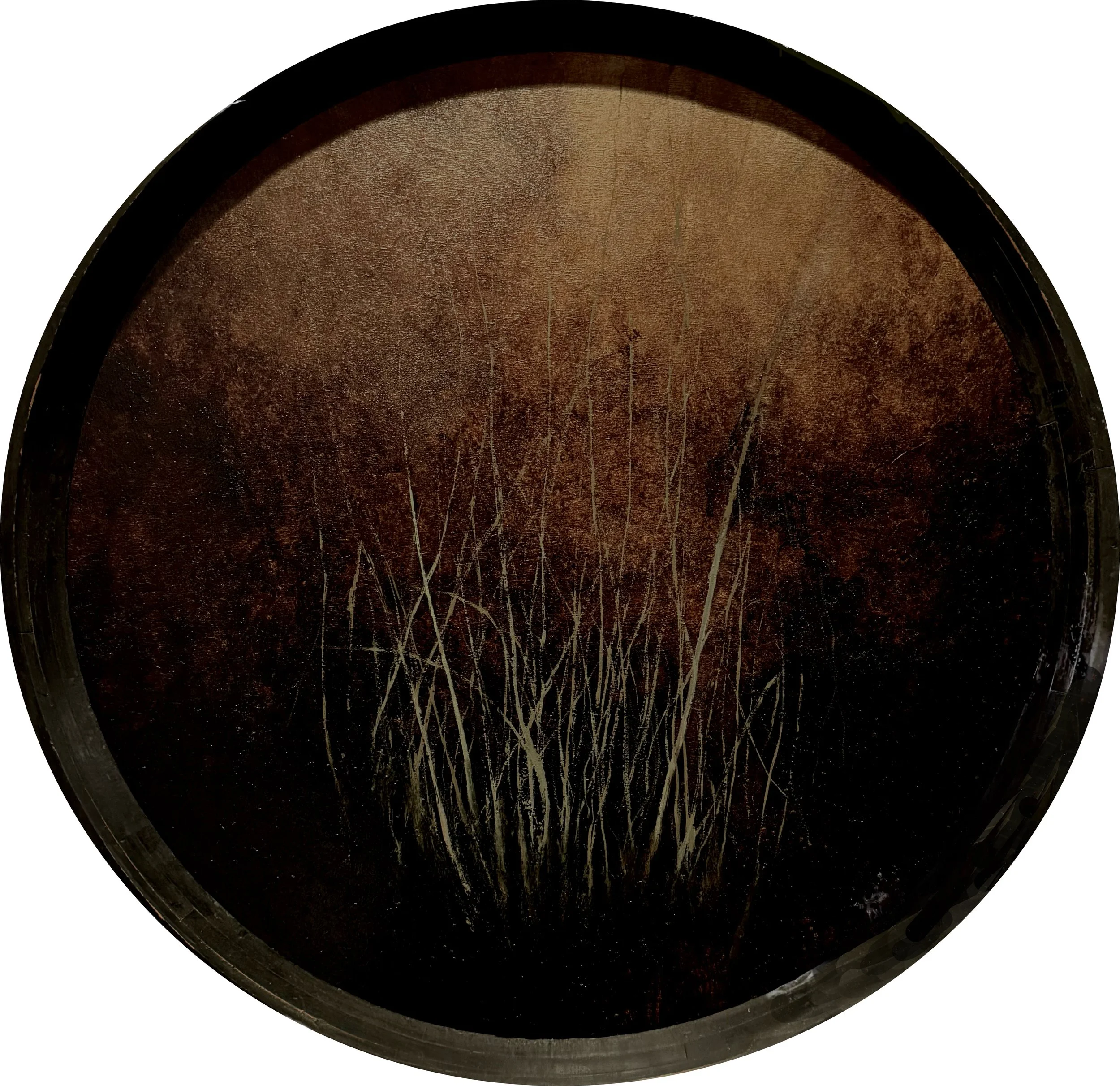
In this Twilight deliberately calls us to a moment in the nineteenth century when American Transcendentalist philosophers, artists, and writers opened a space for a spiritual, ethical, and personally meaningful relation to nature and ecology. Although, sadly, we let that moment pass, it may yet not be too late to heed what it was telling us.
These paintings are not strictly allegorical nor overtly political, nor are they “doomerist” or without hope. The intention is to reflect truth while occupying an ambiguous position in the space of these tensions.
Many are framed in vintage Victorian moldings that once held clock-faces, portraits, and mirrors sourced from New England attics and flea markets. Luminous natural forms emerge through a dark veil of tar and time like a hymn between worlds where beauty and decay, light, loss, and rebirth share the same breath.